The days are getting shorter, the playgrounds in Kreis 5 empty out by five, and a lot of Zurich parents are asking the same question: what can my child do indoors this winter that is more than just burning off energy?
Martial arts comes up quickly, usually with a second question right behind it: "Will it make my child more confident, or more aggressive?" This guide answers that honestly, explains what kids actually learn on the mat, and gives you a checklist to judge any class, ours included.

The Short Version
Brazilian Jiu-Jitsu (BJJ) is a grappling art: holding, escaping, controlling. There is no striking. That is the main reason it works so well for children, and why the name of our academy, House of Gentle Arts, is not a coincidence.
What Kids Actually Learn (It Is Not Fighting)
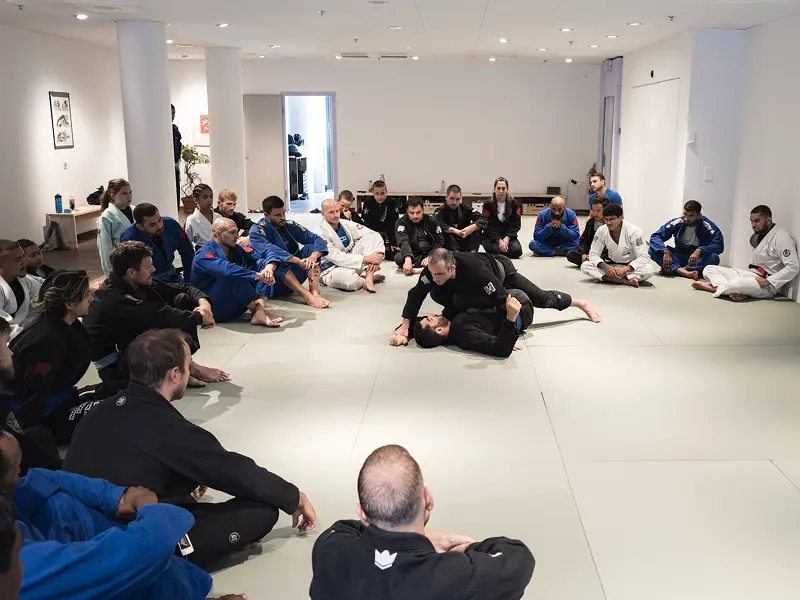
Watch a kids class for ten minutes and you will mostly see games. Bear crawls, crab walks, "escape the shark", balance challenges with a partner. Underneath the games, children practice things that are hard to teach at a desk:
- Body control. Rolling, falling safely, balancing and coordinating both sides of the body. Useful for every other sport, and for the ski slope in February.
- Staying calm under pressure. Being held down and working your way out, without panicking, is a skill. Children get to rehearse it in a safe setting, again and again.
- Listening and focus. A technique has steps. Miss one and it does not work. The feedback is immediate and nobody has to raise their voice.
- Winning and losing well. Every child ends up on the bottom sometimes. Learning that this is normal, and trying again, is the real lesson.
- Respect for a partner. You cannot practice BJJ alone. Children learn quickly that they are responsible for the person they train with.
Confidence: Where It Really Comes From
Confidence in children rarely comes from being told they are great. It comes from doing something difficult and noticing that it worked.
BJJ is built around small, visible steps: a movement that did not work last month works today. A stripe on the belt. A younger child asking for help. Shy children often thrive here because nobody has to perform in front of a crowd. They work with one partner, at their own pace, and progress shows on its own.
Curious how progress is marked? See the BJJ belt system explained.
Bullying: An Honest Answer
No sport is a magic shield against bullying, and we would be suspicious of anyone who promises that. What martial arts can do is change how a child carries themselves and how they react.
What we teach, in this order
1. Notice and avoid. Walk away, stay with friends, trust your gut.
2. Use your voice. Stand tall, say "Stop" loudly, tell an adult. Telling is not snitching.
3. Protect without hurting. If someone grabs or pushes, BJJ gives children ways to get free or hold someone in place without throwing a punch.
That third point matters to parents and schools alike. A child who knows how to control a situation without striking has an option between "do nothing" and "hit back".
Just as important: the mat is a place where children practice being strong and kind at the same time. Bigger kids learn to be careful with smaller ones. That is anti-bullying work too, from the other side.
If your child is currently being bullied, please also talk to the school and, if needed, to a professional. Training can support that process, it does not replace it.
"Will It Make My Child Aggressive?"
It is the most common worry, and in our experience the opposite tends to happen. Children who have a place to wrestle, push and pull under clear rules usually have less need to do it in the living room or the schoolyard.
Three things keep it that way in a well-run class:
- Clear rules from day one. What happens on the mat stays on the mat. Techniques are never for showing off to classmates.
- The tap. A tap means stop, immediately, always. Children learn to respect someone else's limit and to state their own.
- Coaches who model it. Calm voices, patience and consistency matter more than any curriculum.
More on safety, for kids and adults, in Is BJJ dangerous?
What Is the Right Age to Start?
There is no single right age, only the right kind of class for each stage.
Starting later is no problem. A twelve-year-old with no sports background can join and catch up quickly. Full details are in our Kids Program post.
Checklist: How to Judge Any Kids Martial Arts Class
Use your trial class to look around. These questions apply to every academy and every martial art:
- Are the children smiling and busy? Long queues and long lectures are a warning sign.
- Are groups split by age or size? A five-year-old and a thirteen-year-old need different classes.
- How do coaches correct? Look for calm, specific and encouraging, never humiliating.
- Is safety visible? Clean mats, tapping taught early, careful pairing of partners.
- Is competition optional? Tournaments can be great, but they should be a choice, not an expectation.
- Can you watch? A good academy is happy to have parents see a class.
- Does your child want to come back? Their answer on the way home counts most.
A Winter Routine in Zurich West
A fixed weekly activity makes the dark months easier for the whole family. HOGA is in the Puls 5 building at Giessereistrasse 18, 8005 Zürich, in the heart of Zürich-West. From Zürich HB, tram 4 (Technopark) and tram 17 (Förrlibuckstrasse) both stop a 2-minute walk away, and there is paid parking in the Puls 5 garage, so it fits into a commute or a school run.
Some families make it a shared project: kids on the mat first, a parent trying an adult beginners class another evening. It gives you something to talk about at dinner that is not homework.

Frequently Asked Questions
What does my child need for the first class?
Comfortable sports clothes without zips and a water bottle. A gi can wait until your child knows they like it.My child is shy. Is that a problem?
No. Many children watch for a few minutes first and then join in. Tell the coach beforehand and we will take it slowly.My child has a lot of energy and struggles to focus.
Short, varied activities and clear rules suit many energetic children well. Let us know before class so the coach can help.Does my child have to compete?
No. Competitions are optional and the focus is on taking part and sportsmanship.Which language are classes taught in?
Ask us when you book and we will tell you what to expect in your child's group: info@hoga-puls5.com.
The best way to find out is to let your child try it. Book a free 7-day trial, check the schedule for kids class times, and bring your child along. Questions beforehand? Write to info@hoga-puls5.com.